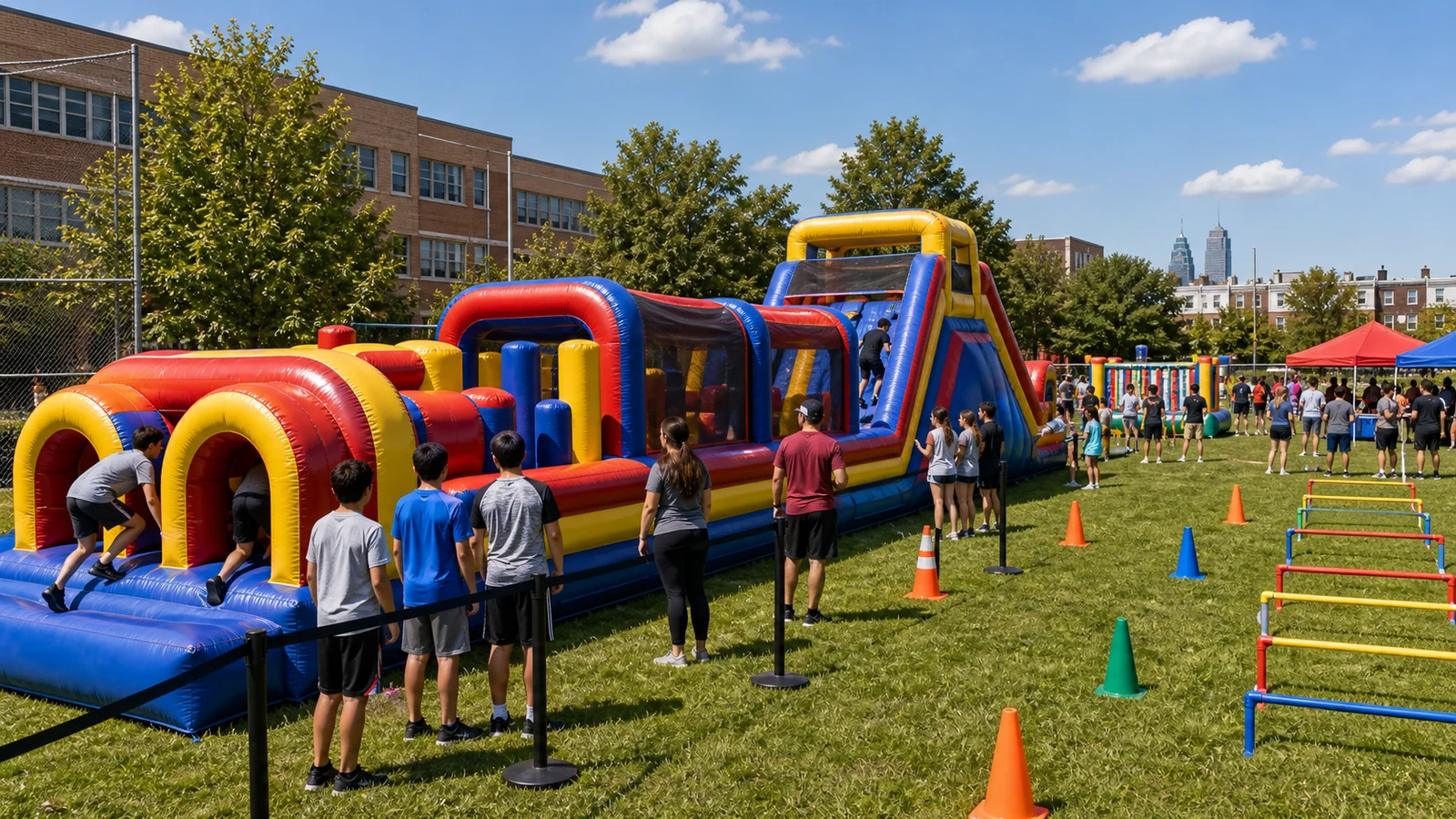
Obstacle Course Rentals in Philadelphia: They can support school field days, camps, company picnics, college programs, teen events, and team challenges across the Philadelphia area.
Build the Obstacle Course as the Anchor Into the Event Plan
For event planning, obstacle courses are useful for events that need visible energy and repeat participation. They can support school field days, camps, company picnics, college programs, teen events, and team challenges across the Philadelphia area.
From a host’s point of view, because an obstacle course draws attention quickly, it should be placed where guests can see it without forcing every other activity to compete for the same walkway.
- Work with the course as the main high-energy activity.
- For event planning, keep start, finish, and reset zones clear.
- From a host’s point of view, add smaller stations nearby to absorb wait time.
- From a host’s point of view, leave spectator and walking space around the course.
Build a Field Day Rotation Around the Course: what to decide
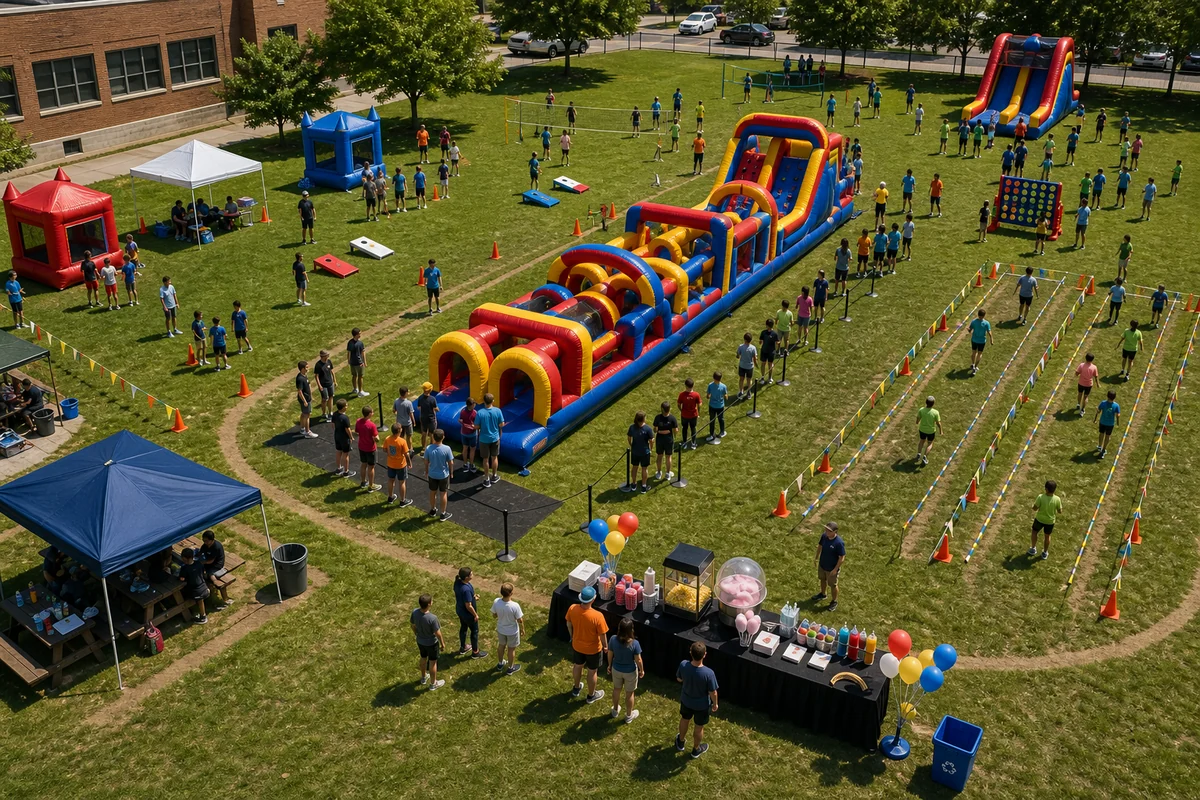
In practical terms, for school field days and team challenges, the course can be one station in a larger rotation. That approach keeps groups moving, helps organizers manage timing, and gives guests a break between active turns.
For event planning, for casual parties, an open-play queue may be enough. For school, camp, college, or corporate formats, a rotation plan can make the event feel more organized.
Map Out Start, Finish, and Spectator Areas Before Event Day
For event planning, the start area should be easy to understand, and the finish area should not send guests into another line or activity. Cones, queue lanes, and a clear walking path help the course feel smooth during busy windows.
When the event uses teams, place spectators where they can watch without crowding the course entrance or finish.
Protect Team Rotations Simple in the Event Flow
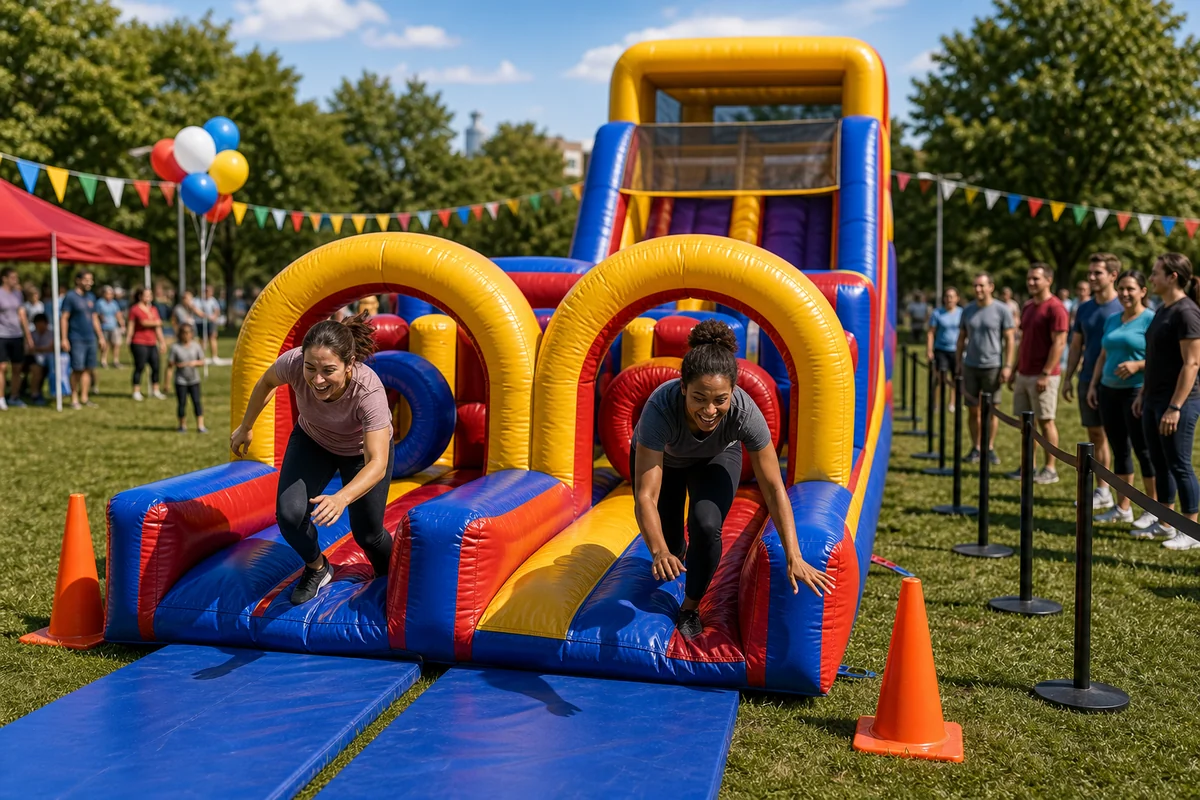
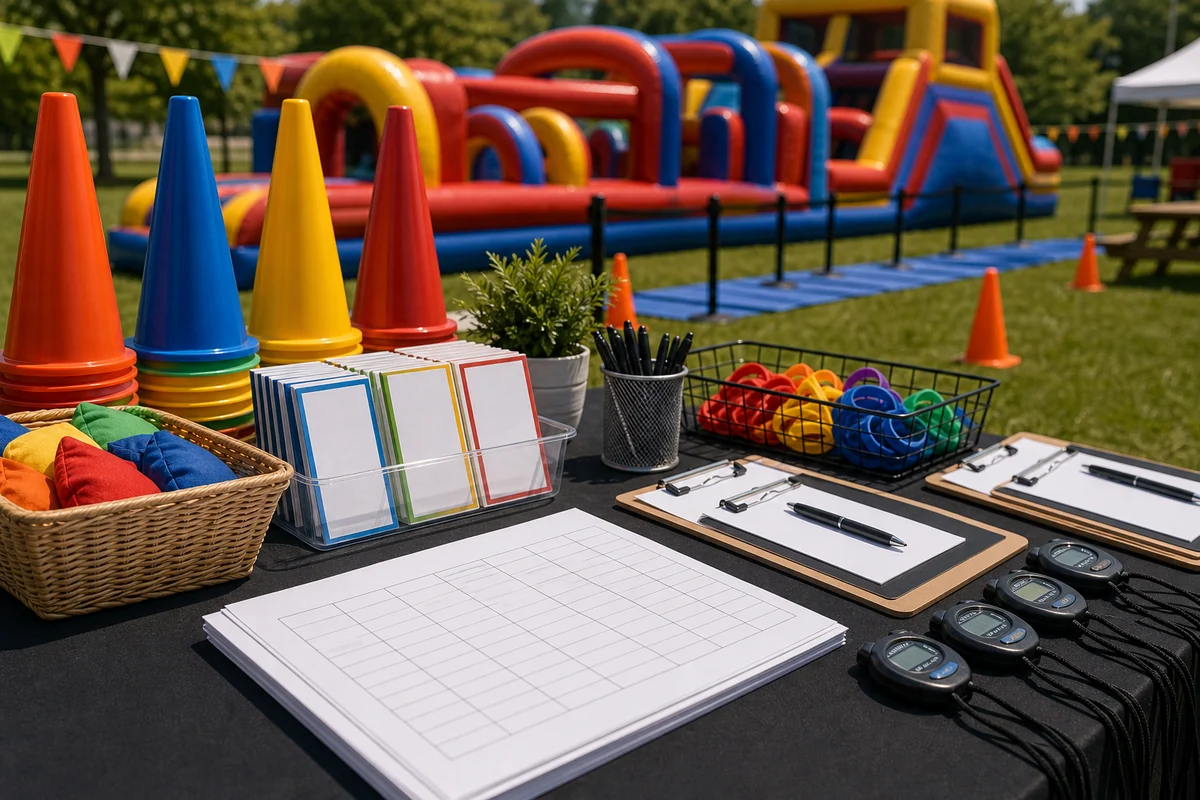
From a host’s point of view, a team challenge does not need complex scoring to be fun. Simple station cards, timed runs, color groups, or rotation windows can be enough.
From a host’s point of view, if volunteers, teachers, chaperones, or company organizers are helping, keep reset steps clear and avoid requiring one person to explain every station.
What to Send When You Quote Obstacle Course Rentals
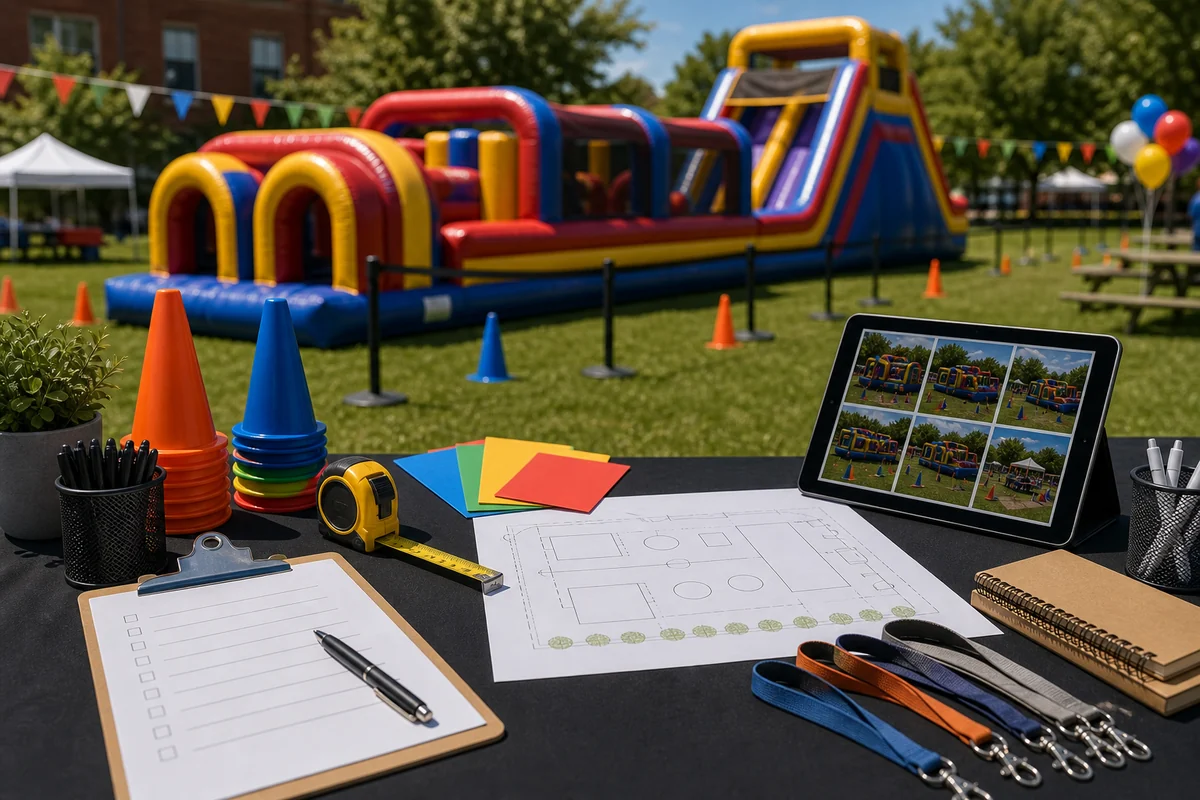
When you request an obstacle course rental quote, include the event date, location, guest count, age range, event format, indoor or outdoor setting, setup surface, available space, access path, power notes, and timing.
Also Tell the team whether the course will be used for open play, field day rotations, team-building competition, a college event, or a company picnic.
- For event planning, event date, location, and event hours.
- For event planning, guest count, age range, and event type.
- In practical terms, surface, dimensions, loading access, and power notes.
- For event planning, open-play line, rotation plan, race format, or team challenge details.
- In practical terms, related rentals such as inflatables, concessions, games, or photo booths.
Common Questions
A useful rule: what events are obstacle course rentals good for?
For event planning, obstacle courses can work for school field days, camps, company picnics, college events, teen events, and team challenges when space and setup details fit.
In practice, should an obstacle course be open play or part of a rotation?
For event planning, both can work. Open play is simpler for casual events, while rotations are useful for schools, camps, colleges, and team-building events.
In practice, what details help with an obstacle course quote?
From a host’s point of view, send the date, location, guest count, age range, surface, dimensions, access path, power notes, event hours, and whether the format is open play or organized rotations.